
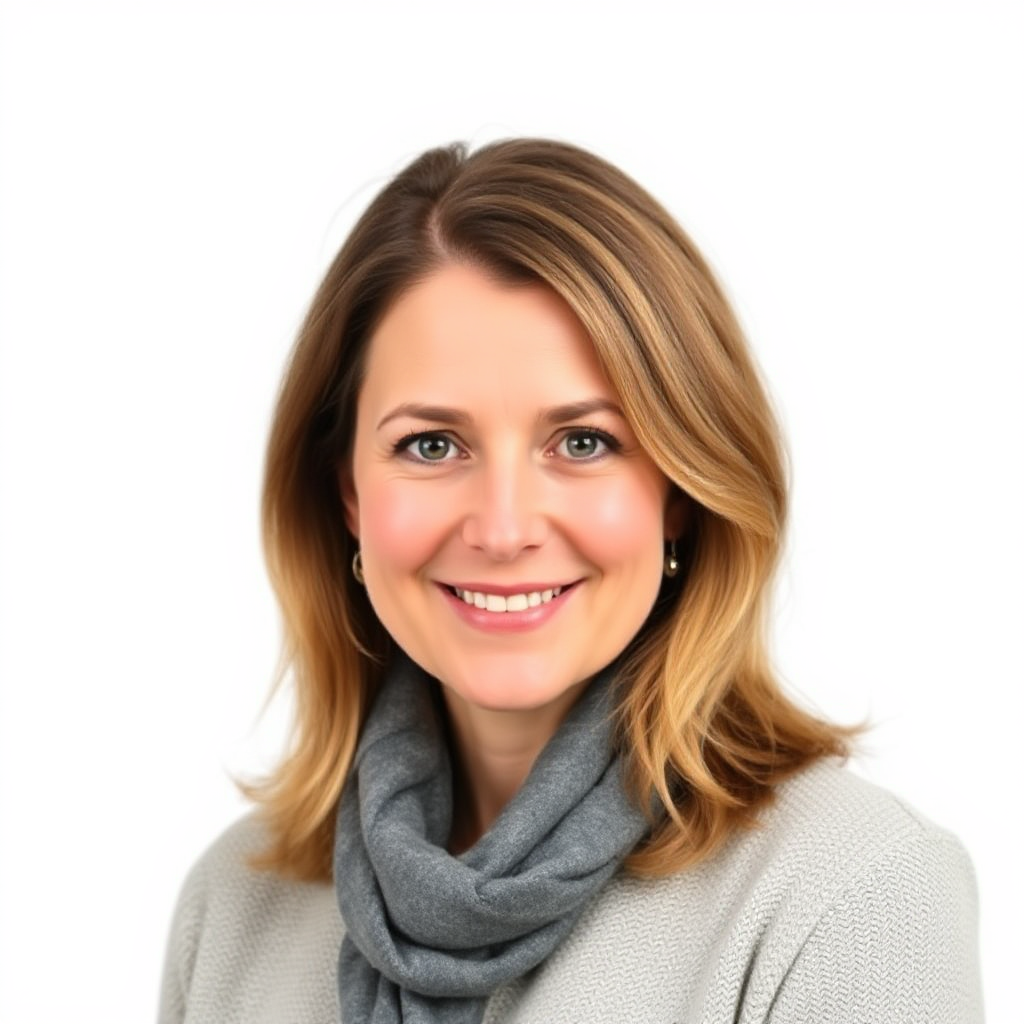

How does it feel to negotiate with Moscow's officials regarding the conflict in the region?
This inquiry has piqued considerable curiosity following multiple latest sessions of peace discussions, which have so far appeared to yield minimal fruit four years after the comprehensive military offensive.
Another round of American-facilitated discussions is likely to occur in the Swiss city later this week. In preparation, an important member of the Ukrainian leadership's delegation, the diplomat, who has taken part in recent direct military discussions, has provided his viewpoint.
According to Kyslytsya, these dealings are professional and generally devoid of the type of political and historical posturing observed elsewhere by Russian leadership.
"Military officials possess a better understanding of the realities in the battlefield," he stated in a conversation on Monday morning.
"It's another thing whether they [the Russians] are able, or not, of relaying information accurately…free from altering or distorting the facts," he added.
It is far from an simple task to try to halt a war. The nature of the front line in eastern Ukraine - where tens of thousands of drones patrol and strike over a vast so-called "grey zone" between the opposing forces, while 200,000 Ukrainian residents still live in the "fortress belt" cities of the Donbas - renders the technical process of disengagement extremely complicated.
"You have to have a precise framework of guidelines and procedures," the diplomat said, "along with a method to verify and monitor."
The Role of External Mediators
Much of this work, he noted, is finished, partly due to the close involvement of American officials, such as General Alexus Grynkewich and a high-ranking Army official.
It's obviously against Kyiv's interest to criticise envoys of the American administration, but when he praises the US delegation for its efforts, he sounds genuine.
"We have to credit the US side for their commitment and their patience," he states, "because they sit in the sessions continuously. They not only watch…they ask inquiries and they heed our responses."
The negotiator was equally complimentary about the roles of the former president's adviser, whom he referred to as "experienced", and wealthy mediator the special representative, whom he characterized as "far more astute person than the caricature image often presented in the media".
The US, Kyslytsya said, will undertake a critical role in monitoring any future truce, with resources encompassing orbital and other types of high-tech monitoring.
"It is necessary to have someone who will play the role of an arbitrator, because if there is a breach there should be a third party that is solid [and] respected."

Past and Current Monitoring Realities
During an eight-year period prior to Russia's major offensive in recent years, this oversight function was handled by the OSCE - a body whose limited means and absence of punitive powers made it mostly unable of preventing an escalation.
"It was no small feat [for them] just to operate two drones flying over the area," he said. "It resembles the stone age period compared to what we have today."
By contrast, latest analyses indicate that as many as twelve thousand drones are operating above the single city of Pokrovsk at any given moment.
An Insider's Perspective on Facing the Adversary
When asked about his ability to sit across the table from delegates from a leader in the Russian government who has been willing to expend over a million-plus of his own men to conquer its neighbor, Kyslytsya, also a former UN ambassador, provided his answer.
He told that he'd had years of practice.
"I saw far more difficult situations. I served five years in New York, three of them prior to the major war. I regularly had to be present with the adversary on a regular basis."
One evening is etched in his memory: 23 February 2022.
In the middle of an emergency UN Security Council session, called to address the urgent crisis in Ukraine, the diplomat got word that his homeland was being assaulted.
Simultaneously, far away to the eastward in Kyiv, the first far-off detonations signaled as the all-out attack on the nation commenced.
During scenes of agonising tension, Kyslytsya attempted to persuade Russia's ambassador, the Russian envoy, to contact his superior, the Russian foreign minister, to obtain guarantees that Russian troops would not cross the border.
"I've already said all I know now," Nebenzia responded, as recalled by Kyslytsya. "I'm not going to wake the minister at this hour."
The world changed at that moment. The diplomat stayed at the UN for another three years prior to returning to Kyiv.
The Path Forward
Should the negotiating teams reconvene in Geneva this week, he'll be there, still working through the details and mechanics of a halt in fighting but waiting all the while for the most important part of the puzzle to fall into place.
"The war might be ended by just one call of one person to his military chief of staff," he said.
"However, the Kremlin dictator [Vladimir Putin] is not up to ending the conflict for the time being."


